USANZ (Urology Society of Australia and New Zealand Conference) was way back in March, but we wanted to thank everyone who came by our booth and supported us. We also wanted to say Congratulations to the Guitar Winners – Craig Wilton, Marcus Raphael and Sean Farrell.

NEW BLADDER CANCER TREATMENT
At USANZ, Johnson & Johnson, the large US pharmaceutical company, was promoting a whole new method of treatment for Bladder Cancer primarily focussed on a more targeted and personalized approach. It is currently undergoing trials in the USA but unfortunately will not be available for many years in Australia. However, it is well worth reading about: https://www.jnj.com/innovativemedicine/oncology/bladder-cancer
BLADDER CANCER IN AUSTRALIA LATEST FACTS
Close to 1 million Australians will have been diagnosed with cancer over the past ten years. This accounts for 3.5% of the total population. (AIHW) Approximately 30,000 were diagnosed with bladder cancer during that time, accounting for 3% of all cancers diagnosed. (CancerAustralia). The annual incidence of cancer diagnosis has increased gradually over this period of time, primarily through population growth and an aging population. Here are some of the details:
- Bladder Cancer IncidenceThe 2025 estimation of newly diagnosed cases of bladder cancer was 3,345 (2,548 males and 797 females). 1,156 deaths were projected (828 males and 328 females) for 2025. (CancerAustralia). It is the 11th most common cancer in Australia. (AIHW)
- Mortality-To-Incidence Ratio
Approximately one person in every 3 who is diagnosed with bladder cancer will die of it. That’s a mortality-to-incidence ratio of about 35%. This is somewhat higher than the mortality-to-incidence ratio for all cancers in Australia, which is 31.5%. Almost 1 in 2 Australians will be diagnosed with some type of cancer by the age of 85. (CancerAustralia) This makes Australia one of the highest-risk countries in the world. For bladder cancer, the lifetime risk of being diagnosed with it by the age of 85 is 1 in 103 (1 in 67 for males and 1 in 234 for females). (CancerAustralia) - Survival Rate
The overall five-year survival rate for bladder cancer is also worse than for all cancers. It is 57% for bladder cancer whereas it is 72% for all cancers. (CancerAustralia) This rate for bladder cancer has deteriorated over the past 30 years, from 66% in 1987-1991 to 57% in 2017-2021. (Insight, Cancer Australia) Reasons include an aging and growing population, but also the lack of awareness and public education about bladder cancer, especially information about the critical early warning sign of blood in the urine (haematuria). Failure of early detection usually results in a diagnosis in later years and at later stages. Treatment options may then become significantly more limited and significantly more expensive.
Additionally, there is a striking male-to-female disparity in the diagnosis and death of bladder cancer. For men this disparity is 3.5 times greater than for women. This is mostly attributed to the historically higher incidence of smoking and exposure to industrial chemicals for men. (Cancer Australia) - Recurrence Rate
Bladder cancer is one of the cancers with the highest recurrence rates among all cancers. Overall, the return rate is between 50%-70%. (AUA) Much of this is due to the uniqueness of the lining of the bladder being prone to repeated tumor formation. Because of this high recurrence rate, bladder cancer requires ongoing monitoring and treatment including cystoscopies, imaging and urine tests. (Oncodaily) Only brain, ovarian and lymphoma cancers have higher return rates. (Cancer Therapy) - High Cost Of Treatment
Bladder cancer has the highest lifetime treatment costs per patient of all cancers. (Springer) It is the most expensive cancer to treat from diagnosis to death because of the biological nature of the disease, the high recurrence rate and the need for regular follow-ups, monitoring and invasive treatment. This creates a financial burden for both the individual as well as the general health system.
Sources:
- https://www.aihw.gov.au/reports/cancer/cancer-data-in-australia/
- https://canceraustralia.gov.au/cancer-types/bladder-cancer/bladder-cancer-statistics-australia
- https://insightplus.mja.com.au/2019/20/bladder-cancer-a-cancer-in-crisis
- https://cancertherapyadvisor.com/factsheets/cancer-recurrence-statistics
- https://oncodaily.com/oncolibrary/bladder-cancer-remission-rate
- https://aua.com.au/services/urological-cancers/bladder-cancer/
- https://link.springer.com/article/10.1007/s00344445-009-0395-z
HOW TO REDUCE THE RISK OF BLADDER CANCER?
- Don’t get old – we wish! Longevity has its plusses and minuses and one of the minuses is the risk of getting bladder cancer, or in fact, any cancer in our later years. One in two Australians over the age of 85 will be diagnosed with cancer, and because bladder cancer is the 11th most common cancer in Australia, there’s a distinct possibility that it could be bladder cancer. That’s why early detection is critical and it’s imperative to regularly check your urine for blood.
- Don’t smoke or stop smoking By far the biggest factor contributing to bladder cancer is smoking – cigarettes, e-cigarettes (vapes), cigars and pipes. Risk increases with how much you smoke and for how long you’ve smoked. When you inhale burning tobacco, cancer-causing chemicals enter the bloodstream, get filtered by the kidneys, are concentrated in urine, which then sit in the bladder lining. (Memorial Sloan Kettering) Around 50% of bladder cancer in the US is attributed to smoking. (PubMedCentral)
- Avoid occupational chemical exposures The highest-risk occupational chemical exposures are aromatic amines found in the chemical, dye and rubber industries, as well as in hair dyes, paints, fungicides, plastics, metals and motor vehicle exhaust. Use protective equipment and follow occupational health guidelines to reduce exposure. In the US, 20% of bladder cancers are attributed to environmental and occupational exposures. (PubMedCentral)
- Stay well-hydrated People who drink lots of clean water tend to have lower rates of bladder cancer, possibly because they empty their bladders more frequently, thus reducing the time that carcinogens spend in the bladder. (American Cancer Society)
- Reduce exposure to arsenic in drinking water This is important for Australians using private bores or tanks in certain geological areas where arsenic may be present. It is generally not a risk for those using urban water supplies. Have water tested in risky areas and if possible, use rain water tanks or filtered water. (American Association for Cancer Research)
- Eat more fruit and vegetables The World Cancer Research Fund considers the evidence for increased consumption of fruit and vegetables reducing the incidence of bladder cancer compelling enough to make it a dietary recommendation. Citrus fruit and cruciferous vegetables (broccoli, cauliflower, cabbage, bok choy, brussel sprouts, turnip, kale, arugula) are particularly recommended. Avoid processed meat in particular. (PubMedCentral)
- Be cautious about certain medications and supplements Some medications such as pioglitazone for diabetes and herbs containing aristolochic acids which are found in some traditional medicines, have been linked to bladder cancer. (PubMedCentral) Discuss taking these with your doctor.
- Don’t ignore symptoms, act early Early detection of bladder cancer is key to an optimistic prognosis and survival. Don’t ignore the most significant early warning sign – blood in the urine. It might not look bright red, and instead could look rusty, pinkish or dark yellow, but take action immediately because your body is telling you that something is amiss. See a doctor as soon as you can, especially if you’re over 70.
Sources:
- https://pmc.ncbi.nlm.nih.gov/articles/PMC11466861/
- https://www.cskcc.org/cancer-care/types/bladder/bladder-prevention-risk-factors
- https://www.cancer.org/cancer/types/bladder-cancer/causes-risks-prevention/risk-factors.html
- https://aacrjournals.org/cebp/article/35/4/497/775617/Water-Related-Exposures-and-Bladder-Cancer-Risk-A
- https://pmc.ncbi.nlm.nih.gov/articles/PMC5010611/
- https://pmc.ncbi.nlm.nih.gov/articles/PMC4127191/
UROGP 2026
Head to Melbourne on Saturday August 15th for the annual UroGP Symposium. UroGP is Australia’s leading forum on urological health specifically for General Practitioners (GPs). UroGP explores complex urology health issues relevant to GPs, and touches on the latest solutions available to patients and innovative new developments in the urology field.
WIN THIS GUITAR AT UroGP at the BladderCancer.org.au booth:

BLADDER CANCER BIG PICTURE
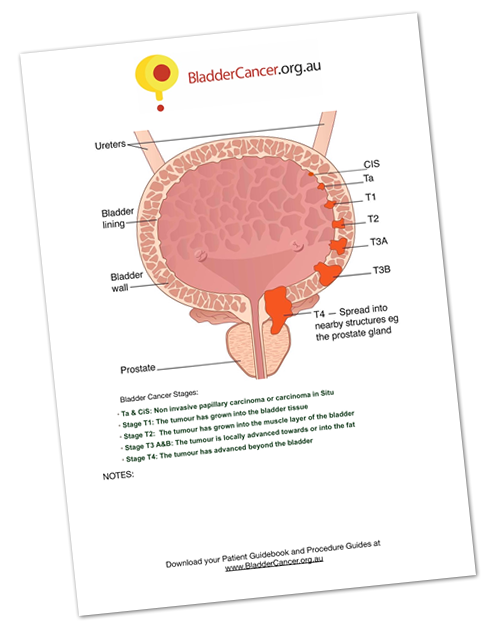
YOU ASKED FOR IT! At USANZ a number of doctors and nurses suggested that we provide a single page A4 Bladder image among our resources. The image can be used when discussing the disease with patients. HERE IT IS! Download and print.
AUSTRALIAN PUBLIC TOILET MAP
Have you ever found yourself short whilst travelling along country roads and through small country towns and think that you’ll have to brave the prickly bush, with all the undergrowth and creepy crawlies, to relieve yourself?
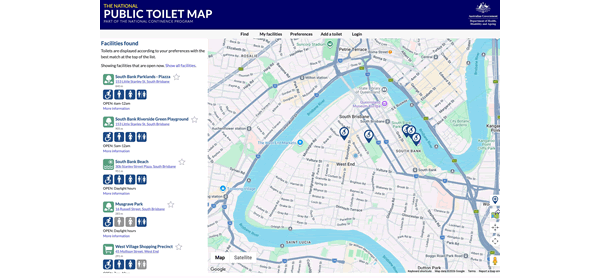
Well, the Australian Government has come to your rescue! Through its National Continence Program it has located more than 23,000 public facilities across Australia on an accessible map. Toilet details include locations, opening hours, accessibility details, and features like sharps disposal and showers.
National Public Toilet Map: www.toiletmap.gov.au
Additionally, the Australian Government also has several other resources for bladder and bowel health, including:
Continence Health Australia which includes:
- A helpline: 1800 33 00 66
- A guide to continence products and aids:
www.continence.org.au
A new website dedicated to bladder and bowel health which can be found at:
NEW YURO PRESIDENT
The Young Urology Researchers Organisation (YURO) are thrilled to announce that Richard Zhang has been appointed as the new President of YURO.
Currently in his final year of medical training, Richard is based at Peninsula University Hospital. He brings his unique perspective and extensive experience to the team, having previously worked across The Royal Melbourne Hospital, Peter MacCallum Cancer Centre, Monash Health, and Cabrini Health.
Richard chose to pursue urology because of the specialty’s unique intersection of cutting-edge technological advancements and hands-on surgical skills. Under his leadership, the YURO team is currently collaborating on several exciting bladder cancer projects.
As President, his primary vision is to provide a strong foundation of support for YURO members and help them achieve their professional goals. If you are a young urologist looking to connect, learn, and grow your career, we highly encourage you to join YURO.
Get in touch: Contact Richard at yurourology@gmail.com to learn more or get involved.The Young Urology Researchers Organisation (YURO) are thrilled to announce that Richard Zhang has been appointed as the new President of YURO.
Currently in his final year of medical training, Richard is based at Peninsula University Hospital. He brings his unique perspective and extensive experience to the team, having previously worked across The Royal Melbourne Hospital, Peter MacCallum Cancer Centre, Monash Health, and Cabrini Health.
Richard chose to pursue urology because of the specialty’s unique intersection of cutting-edge technological advancements and hands-on surgical skills. Under his leadership, the YURO team is currently collaborating on several exciting bladder cancer projects.
As President, his primary vision is to provide a strong foundation of support for YURO members and help them achieve their professional goals. If you are a young urologist looking to connect, learn, and grow your career, we highly encourage you to join YURO.
Get in touch: Contact Richard at yurourology@gmail.com to learn more or get involved.
LOVE TO HAVE YOU JOIN OUR BOARD
We’d love to have some additional energy and input on our board! If you have had or have bladder cancer; are a carer or family member; or a medical practitioner or researcher in the field, we would very much welcome your involvement in our charity. Please contact Tony, bladder cancer survivor, co-founder and chair at tony.moore@bladdercancer.org.au
PLEASE DONATE
We get NO GOVERNMENT FUNDING. We have good inventory of Bladder Cancer resources including a Patient Guidebook and Patient Procedure Guides.
ORDER AN INFO PACK. Includes booklets and guides, patient cards, pens, toilet door poster. $50 Australia wide. contact@bladdercancer.org.au